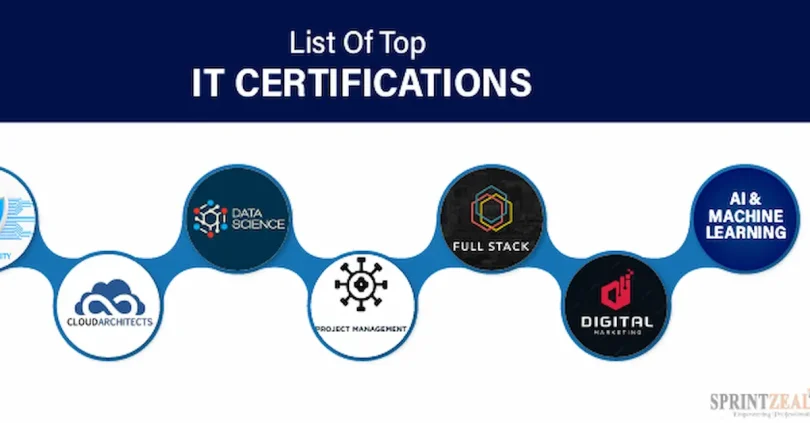

In today’s fast-growing digital world, Information Technology (IT) has become one of the most important and in-demand career fields. Almost every business, whether small or large, depends on technology for daily operations, communication, security, and data management. Because of this, skilled IT professionals are needed everywhere.
One of the best ways to enter the IT field or grow your existing career is through IT certifications. These certifications help you learn practical skills, gain industry knowledge, and prove your expertise to employers. Unlike traditional degrees, IT certifications focus more on real-world, job-ready skills that companies actually need.
Whether you are a student starting your journey, a beginner exploring tech, or a professional looking to upgrade your skills, an IT certification can open the door to better job opportunities and higher career growth.
In this complete IT Certification Guide, we will explore what IT certifications are, why they are important, different types of certifications, and how you can choose the right path for your future in the tech industry.
What is an IT Certification?
An IT certification is an official qualification that shows you have learned and mastered specific skills in the field of Information Technology. It is usually offered by well-known technology companies and organizations such as Microsoft, Google, Cisco, and CompTIA.
Simple Meaning
In simple words, an IT certification is proof that you have the knowledge and practical ability to work with certain technologies like networking, cybersecurity, cloud computing, or programming.
How It Works
To get an IT certification, you usually need to:
- Enroll in a course (online or offline)
- Learn technical skills through lessons and practice
- Pass an exam or assessment
- Receive a certificate after completion
Difference Between IT Certification and Degree
An IT degree usually takes several years and includes both theory and general education subjects. On the other hand, IT certifications are shorter, more focused, and designed to teach job-specific skills that you can use immediately in the workplace.
Real-World Importance
IT certifications are widely recognized by employers because they show that you have practical, hands-on knowledge. For example, someone with a cloud certification may be preferred for a cloud engineer job even without a formal degree.
you may also like to read these posts;
Study Plan for Exams: Score Higher in 2026 Easily
IT Certification Guide: Start Your Tech Career Fast
Student Learning Guides: Study Smarter in 2026
Online Mock Tests: Boost Your Exam Score Fast in 2026
Best Free Certification Courses to Boost Your Career Fast
Why IT Certification Guide Are Important
IT certifications are very important in today’s digital era because they help individuals build strong technical skills and improve their career opportunities in the technology field.
High Demand in the IT Industry
Almost every company depends on technology, which creates a huge demand for skilled IT professionals. Certifications help you meet this demand by proving your abilities. IT Certification Guide
Better Job Opportunities
Having an IT certification increases your chances of getting hired. Employers prefer candidates who already have verified skills and practical knowledge. IT Certification Guide
Higher Salary Potential
Certified professionals often earn more than non-certified candidates because their skills are specialized and industry-relevant.
Skill Validation
IT certifications act as proof that you understand specific technologies and can work on real-world IT tasks effectively.
Easy Entry into the Tech Field
For beginners, certifications are a great way to enter the IT industry without needing a long or expensive degree program.
Global Recognition
Many IT certifications from companies like Microsoft, Google, and Cisco are recognized worldwide, giving you opportunities to work internationally. IT Certification Guide
Career Growth and Promotion
If you are already working in IT, certifications can help you get promotions, new responsibilities, and better positions in your company. IT Certification Guide
Keeps You Updated
Technology changes quickly, and certifications help you stay updated with the latest tools, systems, and industry trends. IT Certification Guide
Types of IT Certifications
IT certifications come in different categories depending on the skills you want to learn and the career path you choose. Below are the main types of IT certifications explained in a simple way IT Certification Guide
1. Beginner-Level IT Certifications
These certifications are designed for people who are completely new to IT. They help you understand basic computer and IT concepts
What you learn: Basic computer systems, IT fundamentals, introduction to software and hardware IT Certification Guide
Examples: CompTIA IT Fundamentals, Google IT Support Certificate IT Certification Guide
2. Networking Certifications
Networking certifications focus on how computers and systems connect and communicate with each other
What you learn: Network setup and management, routers and switches, troubleshooting network issues
Examples: Cisco CCNA, CompTIA Network+
3. Cybersecurity Certifications
These certifications focus on protecting systems, networks, and data from cyber threats and hackers
What you learn: Ethical hacking basics, security systems, risk management and protection
Examples: CompTIA Security+, Certified Ethical Hacker (CEH) IT Certification Guide
4. Cloud Computing Certifications
Cloud computing certifications teach you how to work with online data storage and cloud platforms
What you learn: Cloud systems and services, data storage solutions, cloud platforms like AWS and Azure
Examples: AWS Certified Cloud Practitioner, Microsoft Azure Fundamentals IT Certification Guide
5. Programming & Development Certifications
These certifications focus on coding and software development skills
What you learn: Programming languages like Python, Java, JavaScript, web and app development, software engineering basics
Examples: Python Certification, Java Certification IT Certification Guide
These different types of IT certifications allow you to choose a career path based on your interest, whether it is networking, security, development, or cloud technology IT Certification Guide
Best IT Certification Providers
There are many trusted companies and platforms that offer globally recognized IT certifications. Choosing the right provider is important because it affects the value of your certificate in the job market IT Certification Guide
Google offers beginner-friendly and professional IT certifications in areas like IT support, data analytics, and digital skills. These certifications are widely accepted and great for beginners IT Certification Guide
Microsoft
Microsoft provides certifications in cloud computing, IT infrastructure, Azure services, and software tools. These are very useful for building a strong IT career in enterprise-level companies IT Certification Guide
Cisco
Cisco is one of the top names in networking certifications. It is best known for CCNA and other networking-related programs that are highly valued in the IT industry IT Certification Guide
Amazon Web Services (AWS)
AWS focuses on cloud computing certifications. These certifications are in high demand because many companies use AWS for cloud storage and services IT Certification Guide
CompTIA
CompTIA offers beginner to advanced certifications in IT support, networking, and cybersecurity. It is one of the best choices for starting an IT career IT Certification Guide
IBM
IBM provides certifications in data science, artificial intelligence, and cloud computing. These are great for advanced learners who want to enter modern tech fields
Oracle
Oracle focuses on database management and software development certifications. It is best for people interested in databases and enterprise software systems
How to Choose the Right IT Certification
Choosing the right IT certification is very important because it directly affects your career direction and future opportunities. With so many options available, you should select carefully based on your goals and interests
Understand Your Career Goal
First, decide what you want to become in the IT field. Whether it is networking, cybersecurity, cloud computing, or software development, your goal will help you choose the right path
Start with Beginner-Friendly Certifications
If you are new to IT, always start with basic certifications like IT fundamentals or support certifications before moving to advanced levels
Check Job Market Demand
Choose certifications that are currently in demand such as cybersecurity, cloud computing, and data-related skills because they offer better job opportunities
Select Trusted Providers
Always prefer certifications from recognized companies like Google, Microsoft, Cisco, AWS, or CompTIA to ensure global value
Consider Your Budget and Time
Some certifications are free while others are paid. Also check how much time you can give before selecting a course
Focus on Practical Skills
Choose certifications that include hands-on practice and real-world projects so you can apply your knowledge in real jobs
Step-by-Step IT Career Roadmap
If you want to build a successful IT career, follow this simple roadmap
Step 1: Learn Basics
Start with basic computer and IT knowledge to understand how systems work
Step 2: Choose Your Field
Select your area of interest like networking, cybersecurity, cloud, or programming
Step 3: Get Certified
Enroll in a certification course from a trusted platform and complete it step by step
Step 4: Practice Skills
Work on real projects, labs, or practice exercises to strengthen your skills
Step 5: Build Resume
Add certifications and projects to your resume or LinkedIn profile
Step 6: Apply for Jobs or Freelancing
Start applying for entry-level IT jobs or freelancing opportunities to gain experience
Tips to Succeed in IT Certifications

Success in IT certifications depends not only on studying but also on how you learn and practice. Here are some simple and effective tips to help you succeed
Set a Clear Study Plan
Create a daily or weekly study schedule and follow it consistently. Small regular study sessions are more effective than last-minute preparation
Focus on Practical Learning
IT is a skill-based field, so always practice what you learn. Use labs, tools, and real-world examples instead of only reading theory
Start with Basics
Never skip the fundamentals. Strong basic knowledge makes advanced topics much easier to understand later
Take Notes While Learning
Write down important points, commands, and concepts. This helps you revise quickly before exams or interviews
Use Online Practice Tests
Mock tests and quizzes help you understand exam patterns and improve your confidence
Join Online Communities
Be part of IT forums, groups, or study communities where you can ask questions and learn from others
Stay Consistent and Patient
IT learning takes time. Stay consistent, keep practicing, and don’t give up if something feels difficult at first
Work on Real Projects
Try to build small projects related to your certification. This improves your understanding and makes your resume stronger
Are IT certifications worth it?
Yes, IT certifications are very valuable because they help you gain practical skills, improve your resume, and increase your chances of getting better job opportunities in the tech industry
Do I need a degree to get IT certifications?
No, many IT certifications are available for beginners without any degree. You can start learning even if you have basic computer knowledge
Which IT certification is best for beginners?
For beginners, Google IT Support, CompTIA IT Fundamentals, and basic networking certifications are great starting points
Conclusion
IT certifications are one of the most effective ways to start or grow your career in the technology field. They help you gain practical, job-ready skills that are highly valued by employers around the world. Whether you are a beginner or an experienced professional, the right certification can open new doors for better opportunities.
The best part about IT certifications is that they are flexible, focused, and available in many different fields such as networking, cybersecurity, cloud computing, and software development. By choosing the right path and staying consistent with your learning, you can build a strong and successful IT career.
In today’s competitive job market, continuous learning is the key to success. If you follow the right IT certification guide, practice regularly, and keep improving your skills, you can achieve long-term career growth in the tech industry.